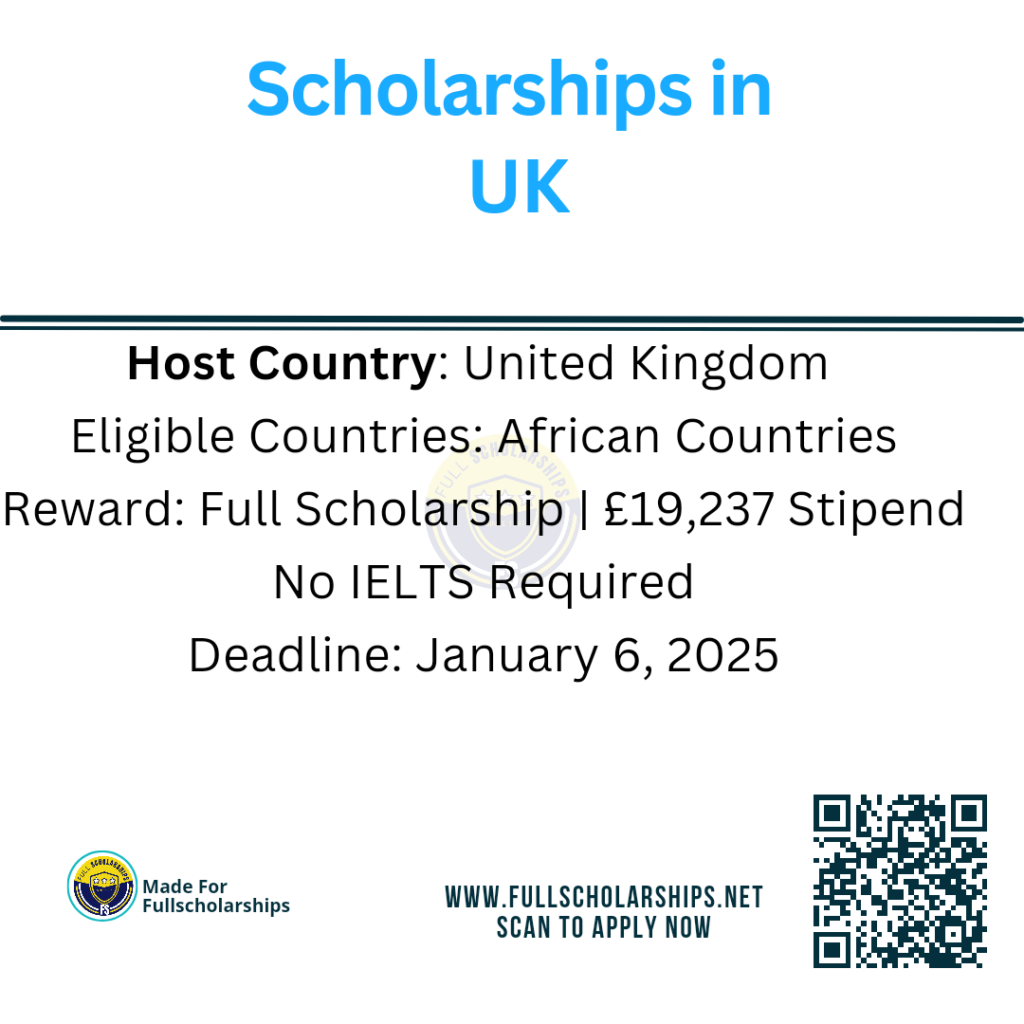
Studying in the United Kingdom is expensive. International tuition for a one-year master’s degree commonly runs into five figures in pounds, and living costs in London, Manchester, or Edinburgh add a great deal more. For many talented students, the dream of a British degree only becomes realistic with a scholarship that covers everything. The good news is that a small group of fully funded UK scholarships exists for exactly that purpose. The challenge is that they are intensely competitive, and each rewards a slightly different kind of candidate.
This guide explains how the major fully funded UK scholarships work, who they are designed for, what they actually pay for, and how to choose where to put your effort. It covers Chevening, the Commonwealth Scholarships, Gates Cambridge, the Rhodes Scholarship, and the Clarendon Scholarships at Oxford, then explains the visa and return-home rules that surprise many winners. Application details change every year, so use this article to plan, then confirm dates and eligibility on each scholarship’s official website.
What “Fully Funded” Really Means
Scholarship websites use the phrase “fully funded” loosely, so it helps to know what a genuinely full award includes. A full UK scholarship normally covers:
- Tuition fees at the international rate for your whole course.
- A monthly living allowance (stipend) intended to cover accommodation, food, and daily costs.
- An economy return flight to the UK and sometimes home again.
- Visa costs, and in some cases the health surcharge that students must pay to use the National Health Service.
- Extra allowances, such as a thesis or research grant, a settling-in payment, or support for dependants.
A partial scholarship may cover only tuition, or only a portion of it, and leave you to find tens of thousands of pounds elsewhere. Before you apply to any award described as “full”, read the funding page carefully and make a list of what is included and what is not. If a scholarship does not cover your living costs, it is not fully funded, however generous it sounds.
The Main Fully Funded Options at a Glance
| Scholarship | Level | Main audience | Typical timing |
|---|---|---|---|
| Chevening | One-year master’s | Emerging leaders with at least two years of work experience, from eligible countries | Opens around August, closes early October |
| Commonwealth Scholarships | Master’s and PhD | Students from eligible Commonwealth countries, often lower- and middle-income | Usually opens in the autumn; check the Commonwealth Scholarship Commission |
| Gates Cambridge | Postgraduate at Cambridge | Outstanding students from outside the UK | Deadlines between October and January depending on course |
| Rhodes | Postgraduate at Oxford | Applicants from selected countries and regions | Varies by constituency |
| Clarendon | Graduate at Oxford | Graduate applicants to Oxford | Linked to Oxford’s graduate application deadlines |
These dates are indicative only. Always check the official website for the cycle you are targeting.
Chevening Scholarships
Chevening is the UK government’s global scholarship programme, and it is the best known of the group. It funds a one-year master’s degree at any eligible UK university and is open to applicants from a long list of countries and territories.
What it covers. Chevening scholars receive full tuition, a monthly living allowance, an economy return flight to the UK, coverage of the visa application fee, and reimbursement of required tuberculosis testing, along with travel and settling-in allowances that are subject to the final terms of the award.
Who can apply. You need an undergraduate degree that qualifies you for postgraduate study in the UK, and at least 2,800 hours of work experience, which is roughly two years of full-time work. The hours can be spread across several roles and can include part-time work, voluntary work, and internships. British and dual-British citizens, people currently living in the UK, and those who have previously received UK government scholarship funding are not eligible.
The cycle. For the 2027/28 round, applications opened on 4 August 2026 and closed on 6 October 2026, so that round has now ended. The pattern is consistent from year to year: applications open in early August and close in early October, shortlisted candidates are interviewed in the first half of the following year, and scholars begin their courses in September or October. If you missed this round, the sensible plan is to prepare now for the next one.
How applications work. You must choose three eligible UK master’s courses and secure at least one unconditional offer from a university by a deadline in the summer of the study year, in this case 8 July 2027. Many applicants forget that the university applications run alongside the scholarship application, so start researching courses early.
The essays. Chevening asks for written responses on themes such as leadership and influencing, networking, studying in the UK, and your career plan. Selection panels look for people who have already shown leadership and who will rise to positions of influence in their own countries.
The return-home rule. Chevening scholars must go back to their home country for at least two years after their studies. This matters a great deal if you hoped to use a scholarship as a route to working in the UK, and it is covered in more detail below.
Commonwealth Scholarships
The Commonwealth Scholarship Commission in the UK offers several types of awards funded by the UK government, including master’s and PhD scholarships for students from eligible Commonwealth countries, particularly lower- and middle-income ones. These awards have a development focus: they are meant to support people who will contribute to the economic, social, and technological progress of their home countries.
What it covers. Typical awards include tuition fees, a living stipend, an airfare, and additional grants such as a thesis grant or a warm clothing allowance. For some award types there is support for dependants. Check the specific scheme.
How applicants are chosen. Application routes differ by country and by type of award. In some countries candidates apply through a national nominating agency, and in others they apply directly through the Commission’s online system. Some awards are administered through universities. Because of these differences, find your country’s route on the official website instead of relying on a general guide.
What selectors want. Commonwealth selection committees focus on academic merit, the strength of your plan to apply what you learn at home, and how your studies will contribute to development in your country. A clear, evidence-based development case is more persuasive than a general statement of ambition. Applicants should be ready to explain a specific problem they want to solve and how their UK course will help them do it.
Timing. Applications for the following academic year typically open in the autumn of the previous year, and a number of recent cycles have had deadlines in the weeks around October and November. Because dates change, check the Commission’s website as soon as possible.
Gates Cambridge Scholarships
Gates Cambridge is one of the most generous scholarships in the world and is open to outstanding applicants from outside the United Kingdom who want to pursue a full-time postgraduate degree at the University of Cambridge. It covers the full cost of study: university fees, a maintenance allowance, an economy airfare, visa and health surcharge costs, and discretionary funding for some dependants, along with a wider programme of leadership and community activities.
Selection criteria. The scholarship looks for intellectual ability, leadership potential, a commitment to improving the lives of others, and a good fit with the course at Cambridge. These four criteria are the real selection test, so your application should show evidence of each one.
How to apply. There is no separate application form. You apply for admission to Cambridge through the usual graduate application system and indicate that you want to be considered for Gates Cambridge. Your application is then assessed against the deadlines for your course, which fall in the period from autumn through the new year. Applying in the earlier round improves your chances for most courses, because decisions on admission and funding both depend on timing.
Competitiveness. Gates Cambridge receives thousands of applications for a small number of places each year, so a strong academic record is necessary but not sufficient. The winners are usually people who combine excellent academic work with a record of service, initiative, and impact outside the classroom.
The Rhodes Scholarship
The Rhodes Scholarship funds postgraduate study at the University of Oxford and is one of the oldest international scholarships in the world. It is awarded through constituencies, which means that you apply in the country or region where you are eligible rather than applying directly to Oxford first. Several African constituencies exist, as do constituencies elsewhere in the world, and the rules and deadlines differ between them.
What it covers. The Rhodes Scholarship pays for university and college fees and provides a living stipend, flights, and visa-related costs, as well as access to a global network of scholars. Awards usually cover two or more years, depending on the degree.
What selectors look for. Rhodes selection committees consider academic excellence, personal integrity, leadership, and a commitment to service. Interviews are intense, and applicants are often asked to discuss topics beyond their field. A strong case combines top-level achievement with a clear sense of purpose.
How to start. Visit the Rhodes Trust website, find the constituency in which you are eligible, and read that constituency’s requirements. You will also need to secure admission to Oxford, so plan your degree application at the same time.
Clarendon Scholarships at Oxford
The Clarendon Scholarships are among the largest graduate scholarship programmes at Oxford and are open to graduate applicants from any country. They cover course fees and provide a living stipend, and awards are made on the basis of academic excellence and promise.
One of the most attractive features is that you are considered automatically when you apply for graduate study at Oxford by the relevant deadline, so there is no separate scholarship application for most applicants. The practical lesson is simple: apply early, apply well, and treat the Oxford application itself as your scholarship application. Check the current rules and the deadline for your course on the Oxford website.
Other Funding Worth Exploring
Beyond the famous names, many UK universities run their own scholarships, and some of them are generous. These range from partial fee waivers to full PhD studentships. Individual departments and research groups sometimes advertise funded PhD projects, with stipends and fees included. If you are looking for a research degree, searching for funded projects at the department level is often more productive than applying for general scholarships. Compare each offer’s terms carefully, and remember that many university scholarships are partial rather than full.
Visas, Dependants, and the Return-Home Rule
Winning a scholarship is only part of the journey. You will also need a Student visa, evidence of acceptance from a licensed university, and, in most cases, English language proof and a tuberculosis test if you come from a listed country.
Dependants. UK rules limit the ability of students on taught master’s courses to bring family members, with exceptions for postgraduate research students and for those who hold certain government-funded scholarships. If you plan to bring a partner or children, check the current rules before accepting an award, and ask your scholarship provider what support exists.
Post-study work. The Graduate route allows many international graduates to stay and work after finishing their degrees. The period will be reduced from two years to 18 months for bachelor’s and master’s graduates who apply on or after 1 January 2027, while PhD graduates keep three years. But note an important point: some scholarships, including Chevening, require you to return home for at least two years after your studies. In those cases, plan your career around the return requirement, because the scholarship terms take priority over general visa options.
Honesty matters. Do not apply for a scholarship that has a return requirement if you do not intend to honour it. Scholarship providers take compliance seriously, and breaches can lead to repayment demands and damage to your reputation.
How to Choose Where to Apply
You will probably qualify for more than one of these scholarships, but you should not apply for all of them at once without a plan. Use this simple approach:
- Match the level. If you want a one-year master’s degree, look at Chevening and Commonwealth. If you want a PhD or research degree, consider Commonwealth, Gates Cambridge, Clarendon, and department-funded projects.
- Match your profile. Chevening values leadership and influence across a range of careers. Commonwealth values development impact. Gates Cambridge and Rhodes look for exceptional academics combined with leadership and service.
- Check eligibility early. Citizenship, work experience, and previous funding rules can disqualify you before you start.
- Plan the timeline. Work backwards from each deadline to schedule tests, references, and essays.
- Apply to several, but tailor each one. A generic application is easy to spot. Customise your essays for each scholarship’s criteria.
Common Mistakes to Avoid
- Starting too late. Strong applications take months of preparation, particularly reference letters and English tests.
- Weak evidence of leadership. Saying you are a leader is not enough. Describe specific situations in which you led, what you did, and what changed as a result.
- Ignoring the return plan. Selectors want to see a realistic plan for how your degree will help your home country or career.
- Choosing courses carelessly. Your course choices should fit your career goals and show that you have researched each programme.
- Trusting unofficial websites. Many fake sites copy scholarship branding. Use only official sources for applications, and never pay a fee to apply for a government scholarship.
Frequently Asked Questions
Is Chevening really free to apply for? Yes. Chevening does not charge an application fee. Be suspicious of anyone who asks you to pay to apply or to guarantee your selection.
Can I apply for Chevening and Commonwealth in the same year? In general, applicants can apply for more than one scholarship, but you should read each scholarship’s rules and be honest about other applications. Do not accept two awards for the same purpose.
Do I need an unconditional offer before I apply? For Chevening, you apply to three courses and need to secure at least one unconditional offer later in the process. For other scholarships, the order differs, so check each one.
Are there scholarships if I have no work experience? Chevening requires work experience, but other awards, including Gates Cambridge, Rhodes, Clarendon, and many university scholarships, are open to recent graduates. Check the individual criteria.
What if I am rejected? Many winners applied more than once. Ask for feedback where it is offered, strengthen your leadership evidence, improve your grades or English score where needed, and try again.
Final Thoughts
A fully funded UK scholarship can change the direction of a career, but it rewards preparation and honesty more than luck. Start by deciding what level of study you want and which scholarships fit your profile. Gather evidence of your achievements, secure strong references, and plan your timeline well in advance. Check every deadline and eligibility rule on the official website, avoid fake offers, and respect the conditions that come with the award, especially return-home requirements. With a clear plan and a strong, truthful application, you can give yourself a real chance of studying in the United Kingdom without paying for it.